|
|
|
Saint-Kitts and Nevis – Citizenship of Elite Club
Nowadays (year of 2011) there are only two countries that allow obtaining citizenship for investment in a reasonably short period of time. In Saint-Kitts & Nevis the whole procedure of getting second passport can take from 3 to 5 months. In the Commonwealth of Dominica the procedure can take up to 6 months. These two programs are the only two “citizenship for investment programs” in the world in the strict sense of the wording “citizenship for investment”. Certainly, there are other countries that allow to obtain citizenship “for special merits” or “for special contribution” into economy or some other sphere (Dominican Republic, Montenegro, Bulgaria, Slovakia, and Austria). But in these states the concrete amount of investment or donation that is appropriate and good for second citizenship purpose is not specified.
Some years ago Saint-Kitts & Dominica were note alone on the second citizenship-second passport market. Belize and Grenada also had similar programs for foreign investors allowing them to obtain citizenships and passports through investments and donations. The threshold of the required investment was low in both Belize and Grenada; due diligence procedure was not paid due attention. So, after some political and diplomatic pressure from the USA and the UK, both programs were buried. Citizenship of Grenada program terminated on October 24, 2001. Citizenship of Belize program terminated on January 15, 2002. This is not the Middle Ages; and selling passport can not be allowed. The rest two countries (Saint-Kitts and Dominica) adopted more serious procedures for due diligence of foreign investors. Moreover, both Dominica, and Saint-Kitts always had (and still have) rather high minimum threshold of investment, required for citizenship (USD 75,000 and USD 250,000 respectively).
In this article we shall focus on the best the oldest second citizenship program in the world – Saint-Kitts & Nevis. Citizenship for investment program of this Federation was established in 1984. Regulations regarding citizenship-by-investment are contained in Part II, Section 3 (5) of the Citizenship Act, 1984. Two investments options are available now:
- Investment in Real Estate (not recommended by experts of our company but also may be organized if the Investor insists on this option). Real Estate route of obtaining second citizenship is a combination of investment and donation. Investor is expected to buy property with a value of USD 400,000 (usually on the first stage of construction) in the project approved by Saint-Kitts government for the purposes of citizenship program. Investor must also be ready to pay purchase cost 5 or 6 %, and then he is expected to pay government fees USD 35,000 per principal applicant and USD 15,000 per each dependent. It is easy to calculate that for a family of four it makes USD 80,000 donation. In addition to purchase cost and government fees investor must also pay due diligence fee USD 3,500 per each person over 18 years of age. That makes another USD 7,000 for a typical family with 1 or 2 kids. As we see, the whole expenses of this investment option will surely exceed USD 500,000. The important condition of real estate option is that you can not sell your property during the first five years after the purchase without losing citizenship of Saint-Kitts. If you sell your property citizenship will be revoked. And the last but not least, even after five years of ownership you should not cherish the idea to sell your property. There is practically no real estate market in the country, and foreign investor will not buy it either. According to the current law, one object can not be used twice for the purpose of obtaining citizenship.
- The SIDF option (recommended as probably the best) requires contribution (donation) of USD 250,000 for a single applicant or USD 300,000 for a family of 2-4 members (e.g., husband, wife, and two minor children under the age of 18 years). All the others fees (due diligence and all the government fees) are included. Though this option is pure donation, experts of our company clearly see that 90 % of our clients choose investment in SIDF.
Advantages of Saint-Kitts and Nevis Citizenship
- Visa-free travel. The following is a list of countries and territories to which citizens and passport holders of Saint-Kitts and Nevis can travel without requiring a visa. Andorra, Anguilla, Antigua and Barbuda, Aruba, Austria, Bahamas, Barbados, Belgium, Belize, Bermuda, Bulgaria, Canada, Cayman Islands, Chile, Colombia, Cook Islands, Costa Rica, Cuba, Cyprus, Czech Republic, Denmark, Dominica, Dominican Republic, El Salvador, Estonia, Fiji, Finland, France, Germany, Gibraltar, Greece, Grenada, Guatemala, Guyana, Haiti, Honduras, Hong Kong, Hungary, Iceland, Ireland, Israel, Italy, Jamaica, Kenya, Kiribati, Republic of Korea (South Korea), Latvia, Lesotho, Liechtenstein, Lithuania, Luxembourg, Malawi, Malaysia, Maldives, Malta, Mauritius, Micronesia, Monaco, Montserrat, Netherlands, Netherlands Antilles, Nicaragua, Niue, Norway, Panama, Peru, Philippines, Poland, Portugal, Romania, Samoa (Western), San Marino, Seychelles, Singapore, Slovakia, Slovenia, Spain, Saint-Kitts and Nevis, Saint-Lucia, Saint-Vincent and Grenadines, Suriname, Sweden, Switzerland, Tanzania, Trinidad and Tobago, Tunisia, Turks and Caicos Islands, United Kingdom, Vanuatu, Vatican City, Venezuela, Virgin Islands (British), Zambia, Zimbabwe
- Dual Citizenship is recognized in Saint-Kitts and Nevis. You do not need to renounce your previous citizenship.
- You have the right to take up residence in Saint-Kitts and Nevis or in any other CARICOM-country at any time and for any length of time.
- You are not liable for taxation, if you live outside Saint-Kitts.
- You are not liable for taxation, if you decide to relocate and live in Saint-Kitts and Nevis, as there are no direct taxes whatsoever.
- As a citizen of British Commonwealth of Nations, you receive certain preferential treatment in the United Kingdom and other countries of the Commonwealth.
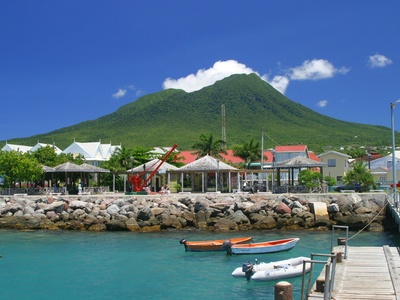
- Heavenly climate in a tropical paradise of Saint-Kitts and Nevis.
Summary of Citizenship Law
For those who are not investors but are interested in Citizenship Law of St. Kitts and Nevis here is a brief summary of law. Citizenship laws are based upon the Constitution of St. Kitts and Nevis. Categories of citizenship are divided by the date of independence, September 19, 1983. Citizenship by birth: Child of unknown parents is granted citizenship. Persons born before September 19, 1983: Birth within the territory of St. Kitts and Nevis does not automatically confer citizenship. Person born on or after September 19, 1983: Child born in the territory of St. Kitts and Nevis, regardless of the citizenship of the parents. Citizenship by descent: Person born before September 19, 1983: Any person living in St. Kitts, who was at that time a British Dependent Territory Citizen (BDTC) or a British Citizen was eligible for citizenship St. Kitts. Their child born abroad or adopted. Their foreign national spouse. Persons born on or after September 19, 1983: Child born abroad, at least one of whose parents was a citizen of St. Kitts and Nevis. Citizenship by naturalization – information was not provided. Dual citizenship is recognized. Person seeking citizenship of St. Kitts is not required to renounce previous citizenship. Loss of citizenship: Voluntary renunciation of citizenship is permitted by law. Letter of renunciation must be sent to the Attorney General of St. Kitts. Contact the Embassy for proper procedures concerning letter of renunciation. The following are grounds for involuntary loss of naturalized citizenship of St. Kitts: Person’s naturalized citizenship was obtained by fraud, false representation, or willful concealment of information. Person commits act of treason against the government.
Questions regarding Saint-Kitts & Nevis citizenship for investment program:
Question: We are interested in Saint-Kitts & Nevis citizenship program. Can our minor kids study in the UK after they obtain passport of Saint-Kitts?
Answer: As to the High Commission of St. Kitts & Nevis in London, nationals of St. Kitts and Nevis are allowed to study in the UK, once they have proof of unconditional acceptance from a UK academic institution and of financial wherewithal to pay for their studies and stay in the UK. Educational programs are out of ”Elma Global” specialization. So, you may contact the UK Home Office on immigration procedures for the UK.
Question: Do they investigate the origin of the funds to be invested in Saint-Kitts?
Answer: Source of funds to be invested in Saint-Kitts must be of clear origin to the authorities of Saint-Kitts & Nevis. The application forms contain questions regarding annual income and costs of assets of the applicants. No documents are required to support the assets and income but the applicants are expected to be honest. In case there are doubts about the source of income that is invested additional documents must be provided to support application.
Question: Is it possible to invest through offshore structure?
Answer: Yes, it is possible to invest from some offshore structure that belongs to the client, not only from client’s personal account. But in case of investing through offshore company the company (or the relevant bank) must provide letter explaining relationship between the offshore structure and the client (e.g., beneficial owner, director, representative, etc.). Hope, this is crystal clear. Yes, they check the background of foreign investors.
Question: I would like to obtain some information regarding the investment in SIDF. Is there any way we can get the application forms on line? Please, give us complete info. I was wondering if our minors become citizenship what would happen to them once they become independent (Age of 18).
Answer: Donation 300,000 USD covers 2 adults + two children aged less than 18 years. You cannot get the application forms online because the legislation of St. Kitts prohibits copying of the forms. They are sent only in the originals and must be returned to the Government even in case they are not used. As to minor children aged less than 18 years old, nothing will happen when they reach 18 years old (if the law of your country of citizenship does not prohibit dual citizenship). In St. Kitts & Nevis dual and multiple citizenship is allowed without any restrictions.
Question: I represent a Ukrainian family who is interested to obtain second citizenship of St. Kitts and Nevis. Can the citizens of St. Kitts be extradited to other countries, in particular, to Ukraine?
Answer: Citizens of St. Kitts and Nevis may be extradited to other countries if there is Treaty or legislation providing for such extradition. St Kitts has in place Extradition Treaties with the United States, Canada, and the United Kingdom. However, there is a Fugitive Offenders Act under which persons committing crimes in any Commonwealth Country may be extradited. The Fugitive Offenders Act is a piece of legislation that is passed and in force in all Commonwealth Countries. There is an extradition treaty between St. Kitts and Nevis and the United States and it covers any would be a crime in St. Kitts and Nevis and in the United States, and could attract a penalty of over 1 year imprisonment. There is Treaty on Extradition between St. Kitts and Ukraine.
Question: I am a Chinese citizen. Can I participate in the Saint-Kitts & Nevis citizenship program?
Answer: Yes, everybody can participate in the programs irrespective of his or her current citizenship. Saint-Kitts allows dual citizenship. But you should keep in mind that in China dual citizenship is not allowed. So, after becoming St. Kitts citizen you must renounce your Chinese citizenship.
Question: Does St. Kitts inform foreign countries (countries of applicant’s origin) about new citizens who obtain passports through Economic Citizenship Program?
Answer: No, it does not inform.
Question: I have a question regarding second citizenship of the Caribbean countries. Will the passport of Saint-Kitts (or Dominica) be applicable for the following countries: Indonesia, Bangladesh, Pakistan, and Malaysia?
Answer: Only Malaysia is visa-free for both Dominica and Saint-Kitts passports. All the rest states from your list are not visa-free. As you may know, visa free entrance is often a political question and does not often reflect economic realities.
Question: I am an Iranian national residing and doing business in Dubai. Can you assist me in obtaining citizenship-by-investment in Saint-Kitts & Nevis?
Answer: No, Iranians (irrespectively of where they live) are not accepted by Saint-Kitts government. We recommend you to consider the citizenship-by-investment programs of the Commonwealth of Dominica or of the Republic of Cyprus. Dominica involves donation to the Government of USD 75,000. Cyprus is very expensive and requires investing several millions of EUR.
If you have any question regarding above-mentioned material or wish to use our legal assistance in obtaining second citizenship and passport of St. Kitts & Nevis, contact us today
|
|